
Contact Improvisation
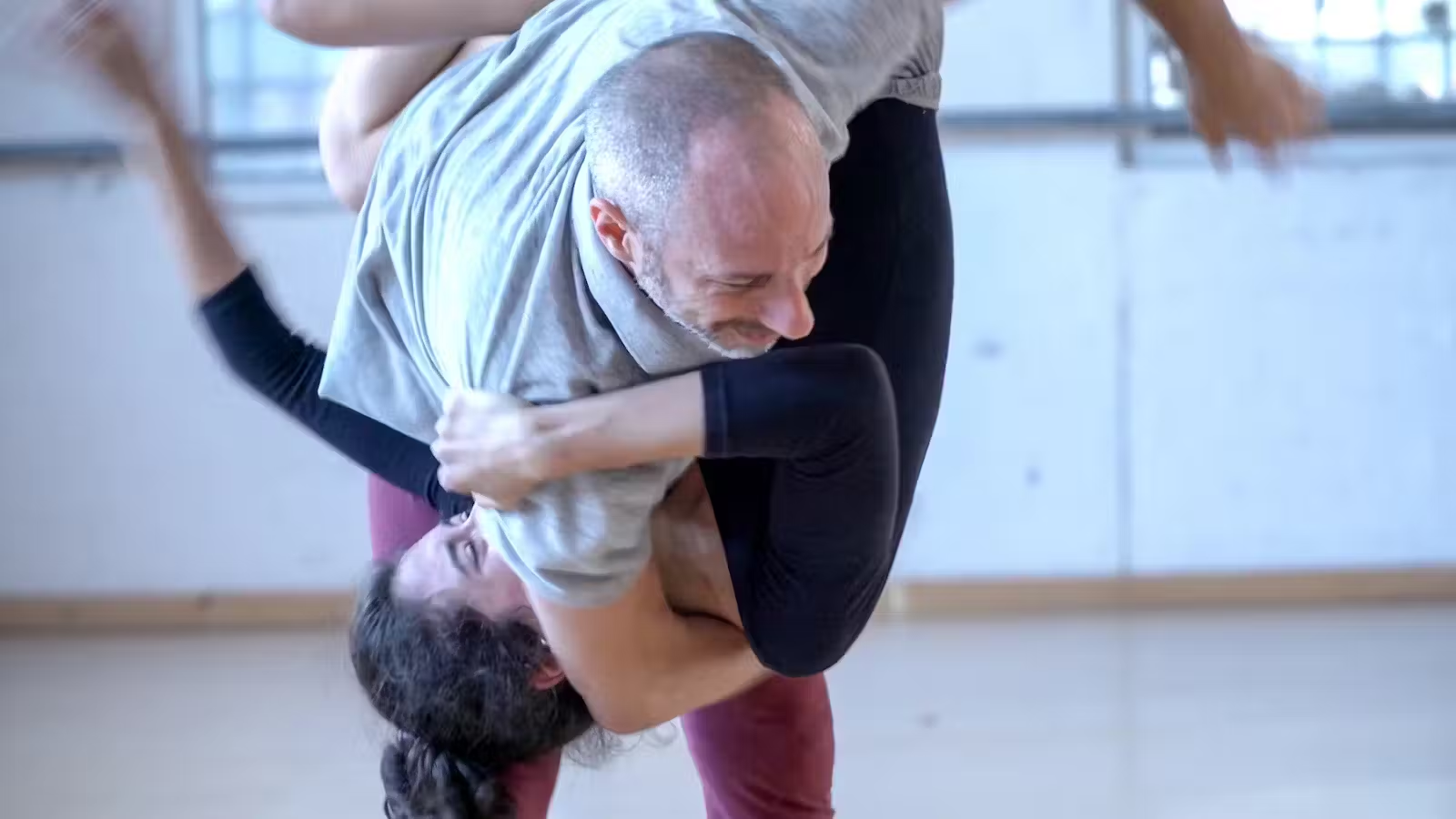
Contact: being connected to yourself, to the earth, to life, to others, and above all to the space between bodies.
Improvisation: spontaneous movement created here and now.
Contact Improvisation is a movement encounter, a dance style based on physical communication between dancers, enabling exploration of touch, weight, direction, and momentum.
Contact is an approach to movement, to dance, to a real and refined encounter of the dancer with their own body, with gravity, with the floor, and with another dancer, in a way that enables sophisticated, new, and enjoyable movement creation. Moving in contact while simultaneously listening to ourselves and our partner allows for unique communicative expression, as well as wonderful acrobatics. Attentive improvisation leads our body and mind to moments in which fixed patterns step aside and open up new possibilities.
The technique began developing in New York in June 1972 by choreographer Steve Paxton, who invited around 17 dancers to a series of exploratory performances at the John Weber Gallery in Manhattan over two weeks. Over the years they continued to experiment with it, both in studio training and in open improvisation performances for audiences.
Today the technique is taught both in open classes for the general public and in professional dance schools, as a technique for improvisation and partnering. Well-known dance companies in Israel and around the world (such as Vertigo and Inbal Pinto) use contact to train their dancers, and even use the movement language created from this organic encounter in their choreographies.
Contact and Jam Classes in Tel Aviv
At Naim there are weekly contact classes, and once every third Saturday there is a contact class with a special theme followed by an open contact jam. Studio Naim is the only open dance studio that has held contact classes and a jam regularly for more than 15 years.
In keeping with the nature of a contact class, each class is different from the previous one and focuses on different topics. The goal is to build movement intelligence and strength that comes from the skeleton rather than the muscles, to achieve release in the body, to get to know it, to detach from logical thinking, and to surrender to instinctive and free touch and flow.
The class requires no prior experience. Come in comfortable clothing (sweatpants).
The tools we will learn and refine:
- Balance, and correct structure and posture that allow bearing weight
- Working with gravity and the floor: grounding and softening
- Using the skeleton instead of muscular force
- Anatomy in movement and the nervous system responsible for movement information
- Sharpening the physical senses and awareness of the space around us
- Finding the dance within us, and creating a safe personal space for expression
- Listening to our body and to another's body
- How to give and receive weight while dancing, and using momentum
- Communication through movement
- Trust in our body and in another's body
- Tools for participating in a contact improvisation jam
Experienced contact dancers who want to refresh the fundamentals are also welcome. We'll switch partners so we can experience dancing with people of different body types and experience levels.
Each class begins with an inward arrival, getting to know our body and refining our movement, continues to a technical topic, and closes with open practice in a circle (round robin).
Frequently Asked Questions
Is contact suitable for beginners with no experience?
Yes. The class is open to all levels and requires no prior experience. You start from the fundamentals and gradually learn to listen to the body, share weight, and move in contact.
Do I need to come with a partner?
No. You come on your own, and partners rotate throughout the class, so everyone gets to dance with people of different body types and experience levels.
Is there physical contact in the class, and is it safe?
Yes, contact is based on touch, weight-sharing, and mutual listening. It's a safe and attentive space, where you work at your own pace and within the boundaries that feel comfortable to you, while listening to yourself and your partner.
What should I wear to a contact class?
Come in comfortable clothing that covers the body and lets you roll on the floor (for example long sleeves and leggings or sweatpants), with no shoes. Bring a water bottle.
What is a contact jam?
A jam is an open improvisation gathering for free practice. At Naim there's a contact jam every third Saturday, after a contact class with a special theme.
