
Mat Pilates
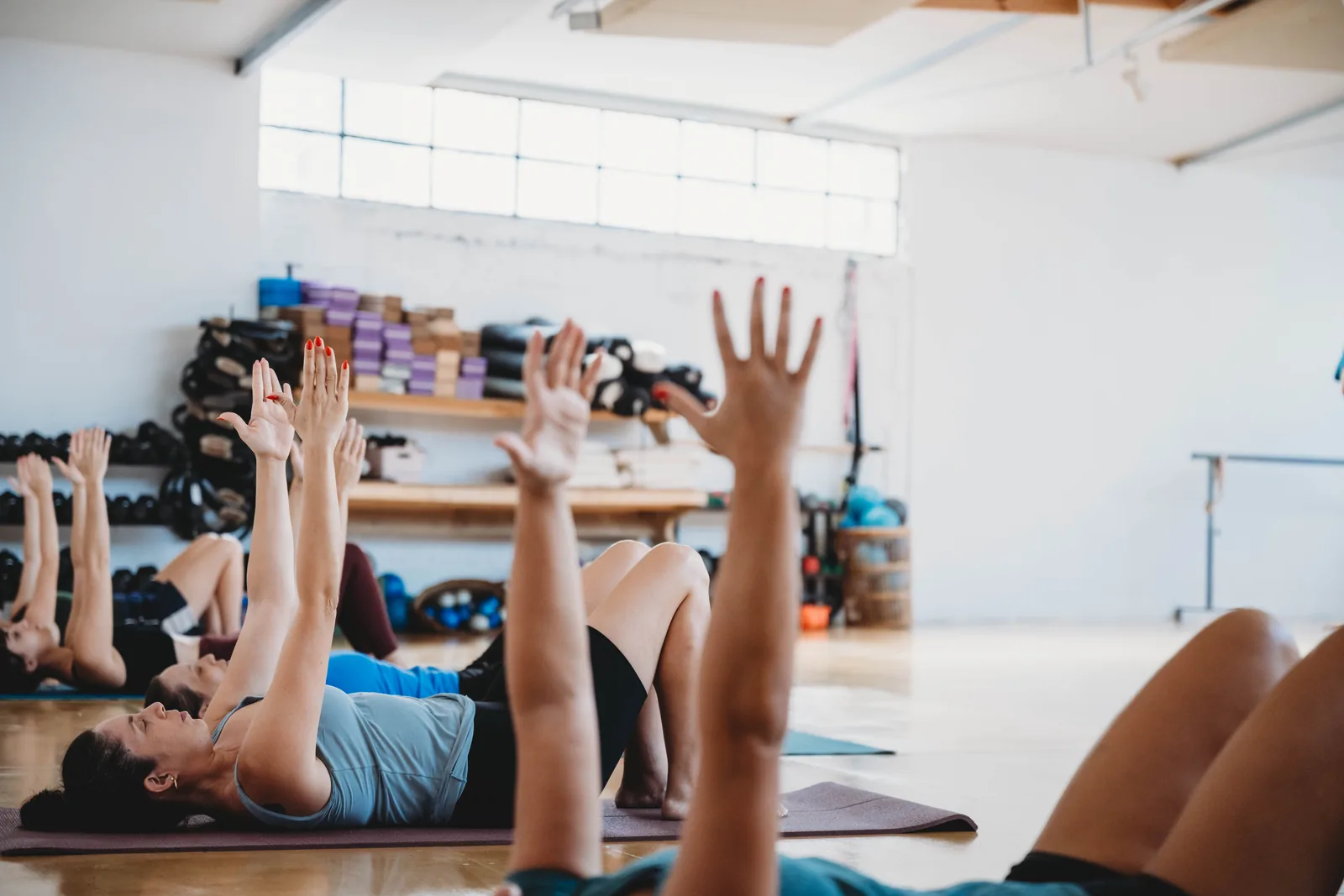
Mat Pilates is a practice that works with your body weight alone, on a mat and with a few small props, built on the same principles Joseph Pilates developed: a strong core, precise breathing, control and posture. There are no springs and no beds here, just you and your body against gravity.
The method was not born under the name Pilates. Joseph Pilates called it Contrology, the complete coordination of body, mind and spirit. And it all starts on the mat: total control of the mind over every muscle, no machines, just body, gravity and breath.
How does Mat Pilates relate to Reformer Pilates?
The two are two sides of the same world. In fact the mat work came first: Joseph Pilates developed a series of floor exercises, and only later added the apparatus and springs to help students reach movements that on the mat demanded a great deal of control. On the apparatus, springs let you regulate resistance, make things easier where needed and support the movement. On the mat there is no such support: every exercise rests on your own strength, stability and control. Combining the two is ideal: the apparatus teaches the body the correct movement and strengthens it in a controlled way, and the mat takes that same control and applies it with no outside help.
Why is Mat Pilates considered more demanding?
Precisely because of its simplicity. On the apparatus, springs can both assist and resist, and in many cases they help the body find the movement and stabilise it. On the mat there is no safety net: the core has to stabilise itself, the small muscles work harder, and any imprecision is felt immediately. Many practitioners discover that an exercise which felt accessible on the Reformer becomes far more demanding on the mat. That is exactly why Joseph Pilates designed the apparatus in the first place: to help the body build the strength and control the mat demands.
In Pilates you realise that strength is not only about what you can lift in the gym. It is also control, endurance, and the humility to start over again as a beginner.
Worth saying clearly: "more demanding" does not mean "better". The apparatus allows precision, personal adaptation and injury rehabilitation in ways the mat cannot always match, and it suits beginners and advanced practitioners alike. The mat, for its part, develops movement independence, body awareness and the ability to practise anywhere, even without equipment. Many of our members combine the two and get the best of both worlds.
Mat Pilates at Studio Naim
Studio Naim is the largest studio in Israel for Mat Pilates classes, and these classes are woven into every one of our branches around the country, and online too.
Naim began as a dance studio, and has always traditionally integrated Mat Pilates as a natural complement to dance classes and an excellent route to strengthening and rehabilitation. The classes are taught here at a high level, in most cases by teachers who are experienced in both dance instruction and Reformer Pilates, and who bring both worlds into the room.
You are only as young as your spine is flexible. (Joseph Pilates)
Who is Mat Pilates for?
Every body and every level. The class is built in layers, so each exercise can be softened or intensified as needed, and complete beginners are as welcome as advanced practitioners. All you need is a mat, comfortable clothes and a willingness to work from the inside. Classes run in small groups with personal attention, an hour of paying attention to your body.
Where are Mat Pilates classes held?
In all of our branches: Tel Aviv, Jaffa, Ramat Gan, Ramat Hasharon, Petah Tikva and Haifa, and online too at Naim at Home. You can see every class by day, time and branch on the timetable, and read more about our Pilates world on the Pilates page.
Frequently Asked Questions
What's the difference between Mat Pilates and Equipment Pilates?
In Mat Pilates you work with your body weight alone, on a mat and with minimal props. In Equipment Pilates (reformer) springs are introduced, letting you regulate resistance, ease the movement, and support it. The mat develops independence and control, the equipment allows precision and personalization. Combining the two gives the best result.
Why is Mat Pilates considered harder than the equipment?
Because on the mat there are no springs to support the movement. The core has to stabilize itself and the small muscles work harder, so every exercise demands your full control. That is exactly why Joseph Pilates developed the apparatus in the first place: to help the body build the strength the mat requires.
Is Mat Pilates suitable for beginners?
Yes. The class is built in layers and every exercise can be eased or intensified to your level, so complete beginners are just as welcome as advanced practitioners. It can be challenging, but it is always personalized and at your own pace.
What should I bring to a Mat Pilates class?
Comfortable clothes that allow movement, and a mat (the studio provides mats, but you are welcome to bring your own). We recommend training barefoot or in non-slip socks. No prior experience is needed.
How much does a Mat Pilates class cost?
There is no separate price for Mat Pilates. A studio membership covers every class type at every branch, so the same membership lets you combine Mat Pilates, Reformer Pilates, yoga and dance in the same month. Single classes are also available. Full details on the memberships and pricing page.
How often should you practise Mat Pilates?
Twice a week is a good starting point, and enough to feel a change in posture and core strength within a few weeks. Practising three times or more usually builds control and flexibility faster. Once a week works too, especially alongside Reformer Pilates or another movement class.
