
Yin Yoga
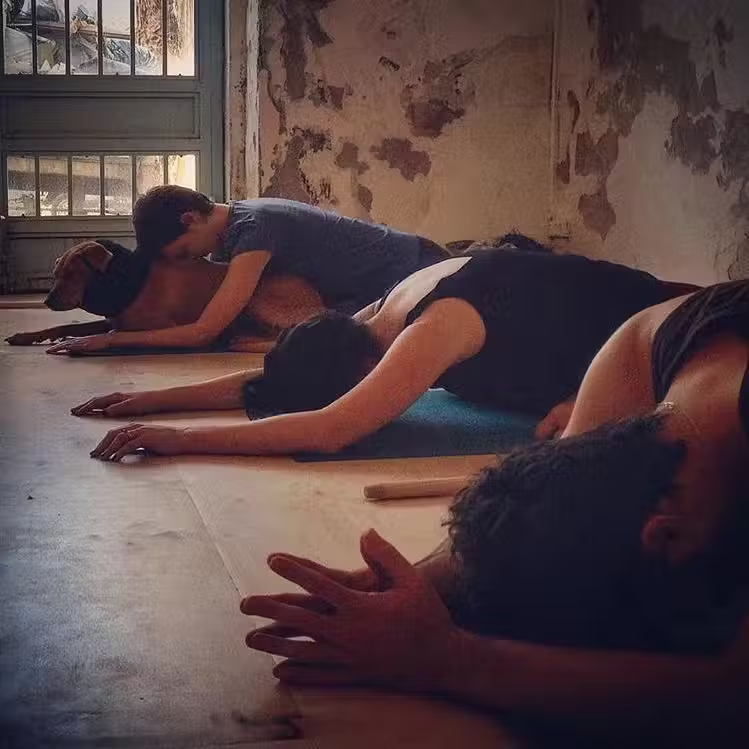
Yin Yoga is a quiet style of yoga in which each pose is held for three to five minutes, and sometimes up to ten. Instead of engaging muscles, the long, soft hold reaches the deep tissues of the body: fascia, tendons, ligaments and joints. At the same time it calms the nervous system. It is a form of inner grounding, the place where you stop running, consciously let go, and allow the body, the intuition and the dreams to speak quietly.
Yin teaches the wisdom of letting go
Yin is not only a style of practice, it is a stance. In a world that is all yang (effort, pace, achievement) yin chooses to yield even while everyone else keeps racing ahead. This is not retreat out of weakness but a choice made out of wisdom: some things in the body and the mind open only when you stop pushing them.
You can think of yin as an inner earth. It is the soil in which our dreams gestate, in which intuition is refined, in which we listen to the body and come into the stillness of our centre. In class this happens quite literally and physically: a few minutes of stillness in a single pose bring attention back inward, to what lies underneath the noise.
When actions arise from the receptive still point they have real meaning. Ideas that emerge from this level of imagination serve more than the individual: they serve the great ecosystem from which our well-being is drawn. (Toko-pa Turner)
What happens in a Yin Yoga class
A yin class is built from roughly eight to twelve poses only, most of them seated or lying down. Each pose is held for three to five minutes, sometimes up to ten. Props are used (bolster, blocks, blanket, strap) not to make things easier, but so the body can genuinely release instead of holding itself up.
Because we stay in the pose longer, the real challenge is to remain present in it and keep the mind awake. The practice is deeply meditative: we train to stay in the moment, to observe the drama the mind produces, without intervening.
The practice rests on three simple principles, articulated by leading yin teachers Paul Grilley and Bernie Clark:
- Find your edge. Move into the pose until sensation appears, then back off slightly. Yin is not meant to hurt.
- Become still. Let go of the small adjustments and the fidgeting, and let the body surrender to gravity.
- Hold for time. Time is what does the work. Connective tissue responds to gentle, sustained pressure, not to repetition.
What yin does for the body
The physical layer. Yin improves joint mobility by releasing the deep tissues: fascia, tendons, joints and bones. Unlike a brief muscular stretch, gentle pressure sustained over long minutes reaches the connective tissue itself, where restrictions accumulate from prolonged sitting, from running or from strength training.
The energetic layer. In Chinese medicine, yin poses are organised around the meridian pathways of the body. The practice works like self-administered acupressure, releasing and strengthening the flow of energy (chi) to the different organs, which supports the immune system and improves our emotional state.
The nervous system layer. A long hold in a supported pose, with slow breathing, shifts the nervous system from a state of action into a state of rest and digest. This is why many people leave a yin class calmer, sleep better, and report a drop in their sense of stress.
Yin and yang: how yin fits into the rest of your practice
We do not get many chances to stop the race of daily life, and it is worth adding one static session to the weekly routine to balance more active practices. If you practise Vinyasa, Ashtanga or Power Yoga, or you run, swim or cycle, yin is the precise complement. It works on exactly what the active practices never reach.
- Yin versus Vinyasa and Ashtanga. Vinyasa and Ashtanga are yang: movement, repetition, heat, muscular work. Yin is static, relatively cool, and aimed at the tissues beneath the muscle. Combining both in one week gives you strength as well as range.
- Yin versus stretching. In stretching classes the target is the muscle and the hold is short. In yin the hold is far longer and the target is the connective tissue and the joint.
- Yin versus yoga therapy. In yoga therapy the practice is built around a specific physical condition, injury or limitation, and the teacher adapts the poses to the individual need. Yin Yoga is a group class with a uniform structure in which everyone holds the same poses. Both are gentle, but one is therapeutic and the other is an ongoing practice.
- Yin and meditation. The long hold helps develop awareness of thoughts, and even slows and stops them, so the method directly supports meditation and mindfulness practice.
Yin Yoga at Studio Naim
Studio Naim runs about 35 Yin Yoga classes a week across ten branches: Tel Aviv (Frenkel, Ibn Gabirol, Maze, Rothschild), Jaffa (Ben Gamliel), Ramat Gan (Bialik, Sokolov, Badner), Ramat Hasharon (Sokolov) and Haifa (Kiat 1, Downtown). Classes run 60 or 75 minutes and are taught by teachers who specialise in slow practice and in working with props.
The practice is open to everyone, including complete beginners, and the studio membership covers all branches and all yoga classes. Exact times are updated in the timetable, and joining options are listed on the memberships and pricing page.
Frequently Asked Questions
What is Yin Yoga?
Yin Yoga is a quiet, slow style of yoga in which each pose is held for three to five minutes, and sometimes up to ten. Most poses are done seated or lying down with the muscles relaxed, so that gentle, sustained pressure reaches the deep connective tissues (fascia, tendons, ligaments and joints) rather than the muscle. The method was developed in the 1980s by Paulie Zink, and spread worldwide by Paul Grilley and Sarah Powers.
How long do you hold a pose in Yin Yoga?
Three to five minutes per pose is the standard working range, and in certain poses you can stay up to ten minutes. Time is the heart of the method: connective tissue responds to gentle pressure sustained over time, not to repetition or effort. A typical class covers only eight to twelve poses in total.
Who is Yin Yoga suitable for?
Yin Yoga suits almost everyone, and especially anyone looking for a calm, meditative practice with no pace and no aerobic effort. It works for complete beginners, for experienced yoga practitioners who want to balance a week heavy on dynamic practice, for athletes, runners and cyclists with tight hips and pelvis, for anyone who sits at a computer for long hours and feels stiffness in the lower back and hip joints, and for anyone dealing with stress, poor sleep or difficulty slowing down. It is also a gentle way into meditation through the body.
Is Yin Yoga suitable for beginners?
Yes. Yin Yoga is one of the easiest entry points into yoga. There are no sequences to memorise, no pace to keep up with and no need for strength or existing flexibility. Every pose is adapted with props (bolster, blocks and blankets), so every body finds its own version. The challenge is not physical but mental: staying still.
What is the difference between Yin Yoga and Vinyasa or Ashtanga?
Vinyasa and Ashtanga are yang practices: continuous movement, heating the body and muscular work synchronised with the breath. Yin Yoga is the opposite, a static practice in a relatively cool body with relaxed muscles, aimed at the tissues beneath the muscle and at the joints. Combining the two in the same week gives you strength and stamina alongside range of motion and calm.
What is the difference between Yin Yoga, yoga therapy and stretching?
In yoga therapy the practice is built around a specific physical condition, injury or limitation, and the poses are adapted to the individual need. Yin Yoga is a group class with a uniform structure. In stretching, by contrast, the target is the muscle and the hold is far shorter, whereas in Yin Yoga the target is the connective tissue and the joint and the hold lasts long minutes.
Does Yin Yoga improve flexibility?
Yes, but differently from ordinary stretching. Instead of lengthening a muscle briefly, Yin Yoga applies gentle, sustained pressure to the connective tissue around the joint, so it mainly improves the range of motion of the joint itself: hips, pelvis, lower back and shoulders. The change is usually felt after a few weeks of regular practice, once or twice a week.
What is Yin Yoga and Sound?
Yin Yoga and Sound is a regular yin class in which the held poses are accompanied by live playing on bowls and percussion. The sound deepens the state of release even further and helps the mind slow down. At Studio Naim the class runs at the Haifa branch (Kiat 1, Downtown), and times are published in the timetable.
What should I bring and wear to a Yin Yoga class?
Comfortable, relatively warm clothing, because the body does not heat up in a yin class. An extra layer and socks are a good idea. Mats and props (bolsters, blocks, blankets and straps) are available at the studio. It is worth arriving a few minutes before the class starts to settle in calmly.
Where and when are Yin Yoga classes at Studio Naim?
Yin Yoga classes run at ten Studio Naim branches: Tel Aviv (Frenkel, Ibn Gabirol, Maze, Rothschild), Jaffa (Ben Gamliel), Ramat Gan (Bialik, Sokolov, Badner), Ramat Hasharon and Haifa. That is about 35 classes a week, 60 or 75 minutes each. Exact times and class booking are in the timetable. The studio membership covers all branches and all class types.
